


On April 17, 2018, the Guangdong Provincial Bureau of Press, Publication, Radio, Film and Television held in Guangzhou a meeting to assess the technical achievements of the project related to the lighting and suspension system for a 1,600 m2 studio at Guangdong Radio and Television Station, a project jointly proposed by Guangdong Radio and Television Station and Guangzhou Siquande Lighting Co., Ltd. The meeting was chaired by Zhuang Wei, head of the Science and Technology Department of the Guangdong Provincial Bureau of Press, Publication, Radio, Film and Television; the chairman of the assessment committee was Mr. Du Baichuan, deputy head of the Science and Technology Committee of the National Radio and Television Administration. The members of the assessment committee included Mr. Wang Jingchi from China Media Group, Professor Niu Pingjuan, who is a doctoral supervisor at Tianjin Polytechnic University, Mr. Zhong Guohong from Guangdong Radio and Television Station, as well as other officials from the Guangdong Provincial Bureau of Press, Publication, Radio, Film and Television.

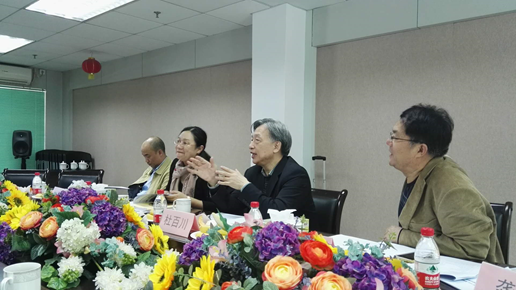
The evaluation committee reviewed the project’s work report, technical report, inspection report, novelty search report, user reports, and information on the progress of the project; it also inspected on-site the relevant data demonstrated by Guangdong Radio and Television Station, the effects of the changes in the visual scenes, and the actual operation of the high-precision three-dimensional lighting suspension system used in large-scale studios.


Following demonstrations and tests, the expert group reached a unanimous conclusion: This suspension system consists of a suspension infrastructure, a control system, and the actual suspension devices. It enables three-dimensional control, ensuring coverage of the entire studio without any blind spots. Thanks to full-digital closed-loop multi-axis control, it is possible to manage multiple suspension devices simultaneously and execute various types of movements; with the use of technologies such as incremental encoders, the vertical positioning accuracy reaches ±2 mm. In total, there are 112 three-dimensional suspension units, 29 horizontal suspension units, and 40 electric hoists. This setup can meet the needs of various types of program production, allowing for multi-dimensional control of stage decorations and lighting effects throughout the studio, with no blind spots.

The system utilizes a range of key technologies such as three-dimensional integrated suspension rods, automatic rowing of ropes, self-lifting mechanisms, rope anti-loosening techniques, and anti-swing designs; these technologies simplify the structural design of the lighting setup. It goes beyond the limitations of static lighting and set designs, enabling dynamic effects to be created as needed during the performance, thereby enriching the methods used in program production.

The system in question features upper and lower logical limit controls, protection against exceeding these limits, collision prevention mechanisms for horizontal movement, safeguards against overpressure, rope breakage protection, overload protection, speed control, an emergency shutdown switch, as well as automatic stopping of the lamp posts – all of which enhance its safety and reliability.
The system utilizes a fully digital closed-loop control mechanism, and it employs technologies such as dynamic backup, programmable control, variable frequency control, and position detection to enable centralized and synchronized control of all devices. It also allows for coordinated movement of various components, real-time adjustment of scenarios, and implementation of high-precision lighting schemes.
The construction of this system is of high quality: the hidden components, such as cable trays and conduits, are arranged neatly with clear markings. The connections between these components are made using specialized grounding wires to ensure reliable grounding protection. Given the large volume and weight of the cables used in the system, reinforcement strips are used at corners and key junction points, which not only improves aesthetics but also facilitates heat dissipation.
Since September 2016, this system has been in use, and it has been employed in the production of over 100 major events, including “I Am a Live Singer,” “National Music Festival,” “Pearl River Channel Promotion Party,” “Southern Documentary Awards Ceremony,” “2017 Spring Festival Gala,” “Guangdong-Hong Kong Pop Song Chart Show,” and “King of Singing Competition.” These events have generated significant social and economic benefits.
In summary, the experts on the evaluation committee believe that this system boasts stable performance, advanced technology, excellent construction quality, and innovative features, placing it at the international forefront. It therefore holds great potential for market promotion.